
In 2026, industrial environments are more digitized than ever. With the rapid adoption of automation, IoT-enabled machines, smart sensors, and AI-driven control systems, manufacturing processes have become highly efficient—but also increasingly sensitive to power quality disturbances.
Even minor fluctuations in voltage, current, or frequency can now disrupt entire production lines, impact data integrity, and reduce equipment lifespan.
Why Power Quality Matters More Today
Modern industries rely on:
- Smart PLCs and embedded electronics
- Robotics and automation systems
- Data centers and edge computing devices
These systems demand stable and high-quality power. Poor power quality is no longer just an electrical issue—it is a business risk.
Studies and industry benchmarks continue to show that poor power quality leads to significant financial losses, including energy waste, downtime, and equipment damage. In India, issues like low power factor and harmonics still contribute to major transmission and operational losses annually.
Key Impacts of Poor Power Quality
- Overheating of transformers, motors, and cables
- Reduced capacity of electrical infrastructure
- Excess neutral currents due to harmonics
- Frequent capacitor bank failures
- Nuisance tripping of protection devices
- Increased failure of sensitive electronics
- Limited performance of UPS and backup systems
- Higher energy losses → increased electricity bills
The Shift: From Periodic Checks to Intelligent Monitoring
Traditionally, industries performed one-time audits or reactive maintenance. In 2026, this approach is no longer sufficient.
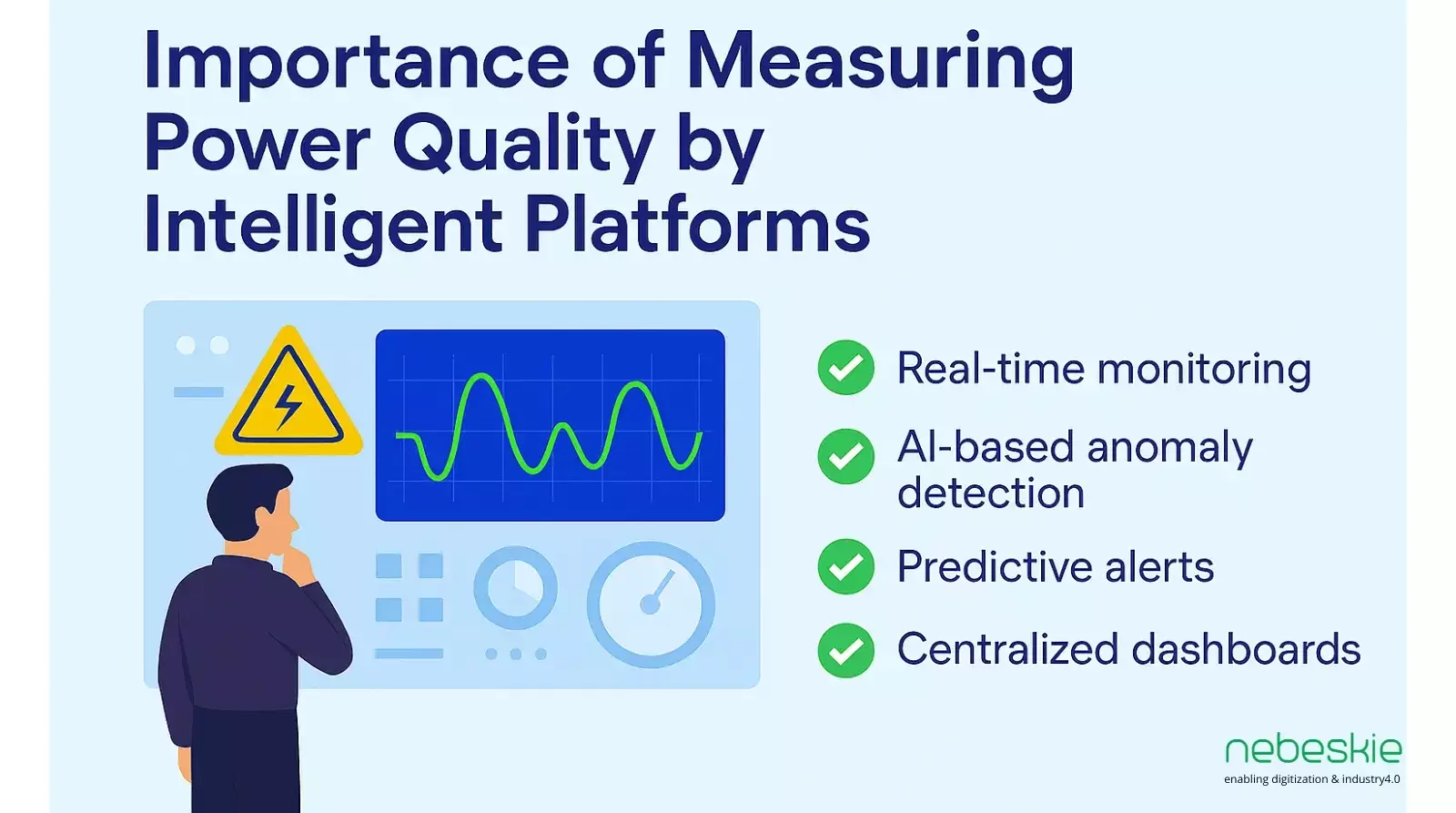
An Intelligent Power Quality Platform enables:
- Real-time monitoring of voltage, current, harmonics, and frequency
- AI-based anomaly detection to identify hidden issues early
- Predictive alerts before failures occur
- Centralized dashboards for multi-site visibility
- Automated reporting and compliance tracking
Real-World Scenario
Consider a manufacturing unit that installed capacitor banks to correct power factor. Without continuous monitoring, a single capacitor failure created imbalance, eventually damaging the entire bank and causing downtime.
With an intelligent platform:
- The failure would be detected instantly
- Alerts would be triggered
- Preventive action would avoid cascading damage
This is the difference between reactive maintenance vs predictive intelligence
Understanding Overvoltage in Smart Systems
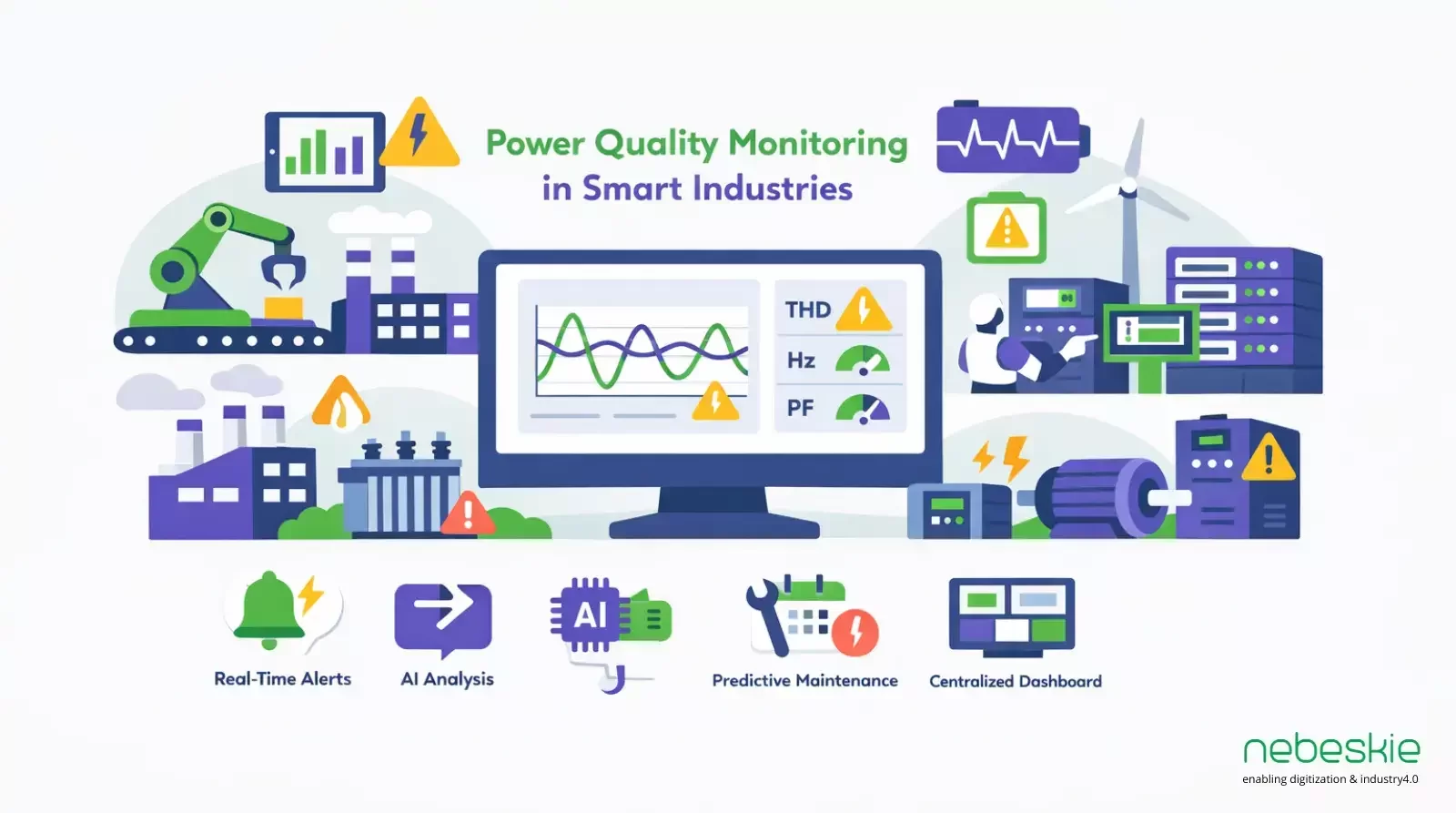
In many facilities, voltages slightly above nominal levels (e.g., 415V rising to 430V) may not cause immediate failure—but they result in:
- Increased energy consumption
- Reduced lifespan of motors and lighting systems
- Frequent LED failures (often voiding warranties)
Continuous monitoring helps correlate voltage trends with energy losses and failure rates, enabling smarter decisions.
Indirect Benefits of Intelligent Monitoring
Power quality issues are multi-dimensional:
- Voltage sag, swell, and unbalance
- Harmonics and transients
- Flicker and frequency variations
- Noise, notching, and DC offsets
Each issue requires a different mitigation strategy. Without accurate data, solving the problem becomes guesswork.
Conclusion: Measure → Detect → Analyze → Act
In 2026, the approach to power quality is clear:
You cannot manage what you do not measure.
An intelligent platform acts like a diagnostic system—similar to how medical imaging helps doctors make accurate decisions.
By continuously measuring and analyzing power quality:
- Industries can reduce both direct and indirect costs
- Improve efficiency and reliability
- Enable data-driven decision-making
Power quality events may last only microseconds—but their impact can last for hours, days, or even months.