
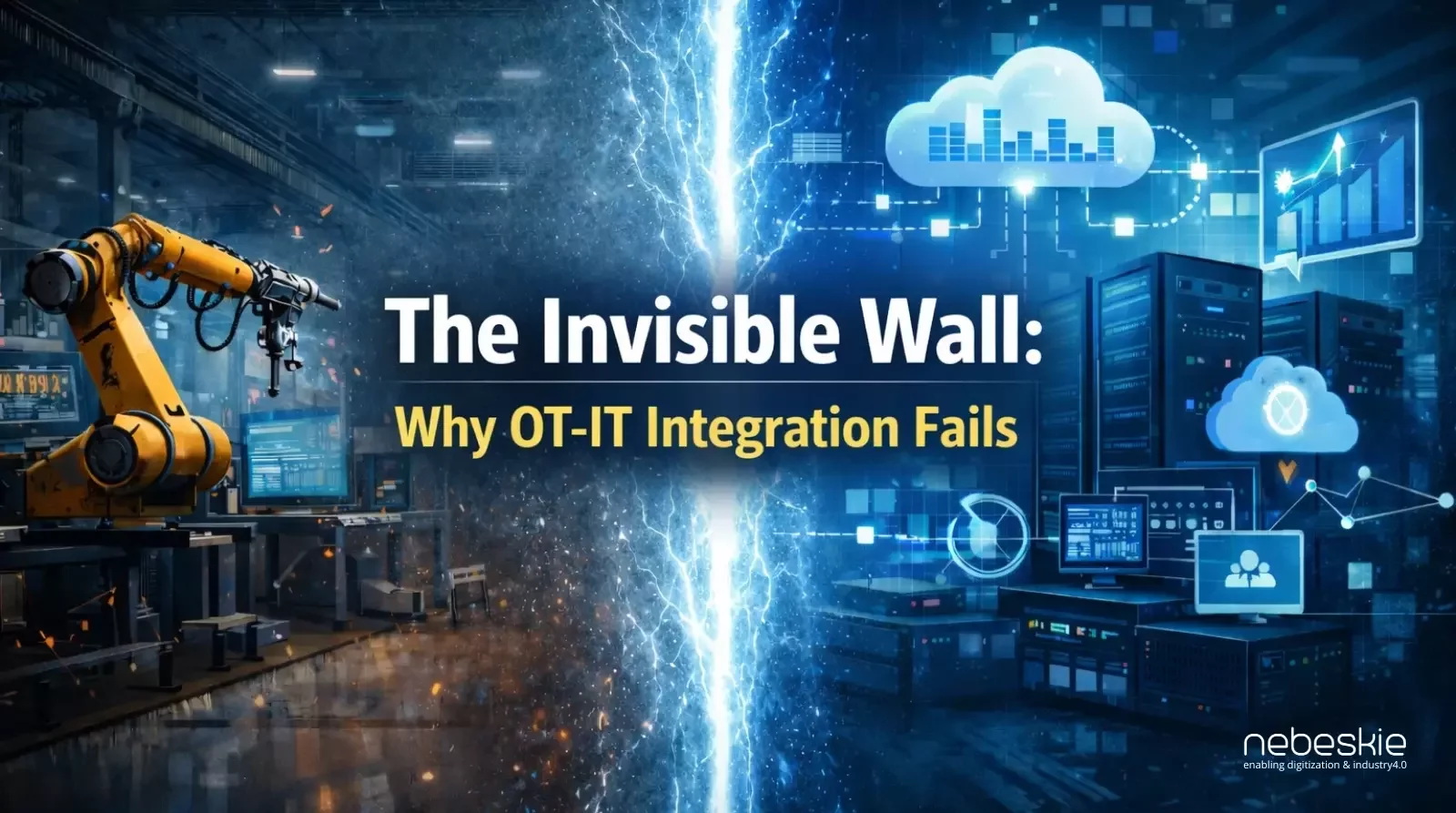
In 2026, the question for manufacturers is no longer "Should we digitize?" but "Why isn't our data working for us yet?"
Despite billions invested globally in Industry 4.0, a staggering 70% of digital transformation projects still fail to scale beyond the pilot phase. We’ve moved past the era of "experimental IoT," yet most factory floors remain trapped behind an invisible wall.
On one side, you have Operational Technology (OT)—the heart of the plant, where PLCs, SCADA systems, and sensors prioritize safety and 99.99% uptime. On the other, you have Information Technology (IT)—the brain of the enterprise, driven by cloud analytics, ERPs, and cybersecurity.
The problem? They speak different languages, live in different timescales, and have fundamentally different DNA.
1. The Language Barrier (Protocol Paralysis)
2. The "Air-Gap" Mindset in a Connected World
Historically, OT was safe because it was isolated (air-gapped). In 2026, that isolation is a competitive disadvantage. However, simply "plugging in" the factory floor to the corporate network is a recipe for disaster.
IT teams often approach OT security with a "patch and reboot" mentality that doesn't work when a 2-minute shutdown costs $50,000 in lost production. This cultural friction—Security vs. Availability—is the primary reason projects are vetoed before they even begin.
3. Information Without Agency
Historically, OT was safe because it was isolated (air-gapped). In 2026, that isolation is a competitive disadvantage. However, simply "plugging in" the factory floor to the corporate network is a recipe for disaster.
IT teams often approach OT security with a "patch and reboot" mentality that doesn't work when a 2-minute shutdown costs $50,000 in lost production. This cultural friction—Security vs. Availability—is the primary reason projects are vetoed before they even begin.
The 2026 Reality: We Need a Bridge, Not a Cable
Bridging this gap isn't about running more cables or buying more sensors. It’s about Middleware.
To scale, manufacturers need a "Digital Buffer"—a layer that abstracts the complexity of the shop floor and presents it to the enterprise as clean, actionable, and secure intelligence. This is the foundation of the "Smart Factory," and it's where the journey to Industry 4.0 truly begins.