
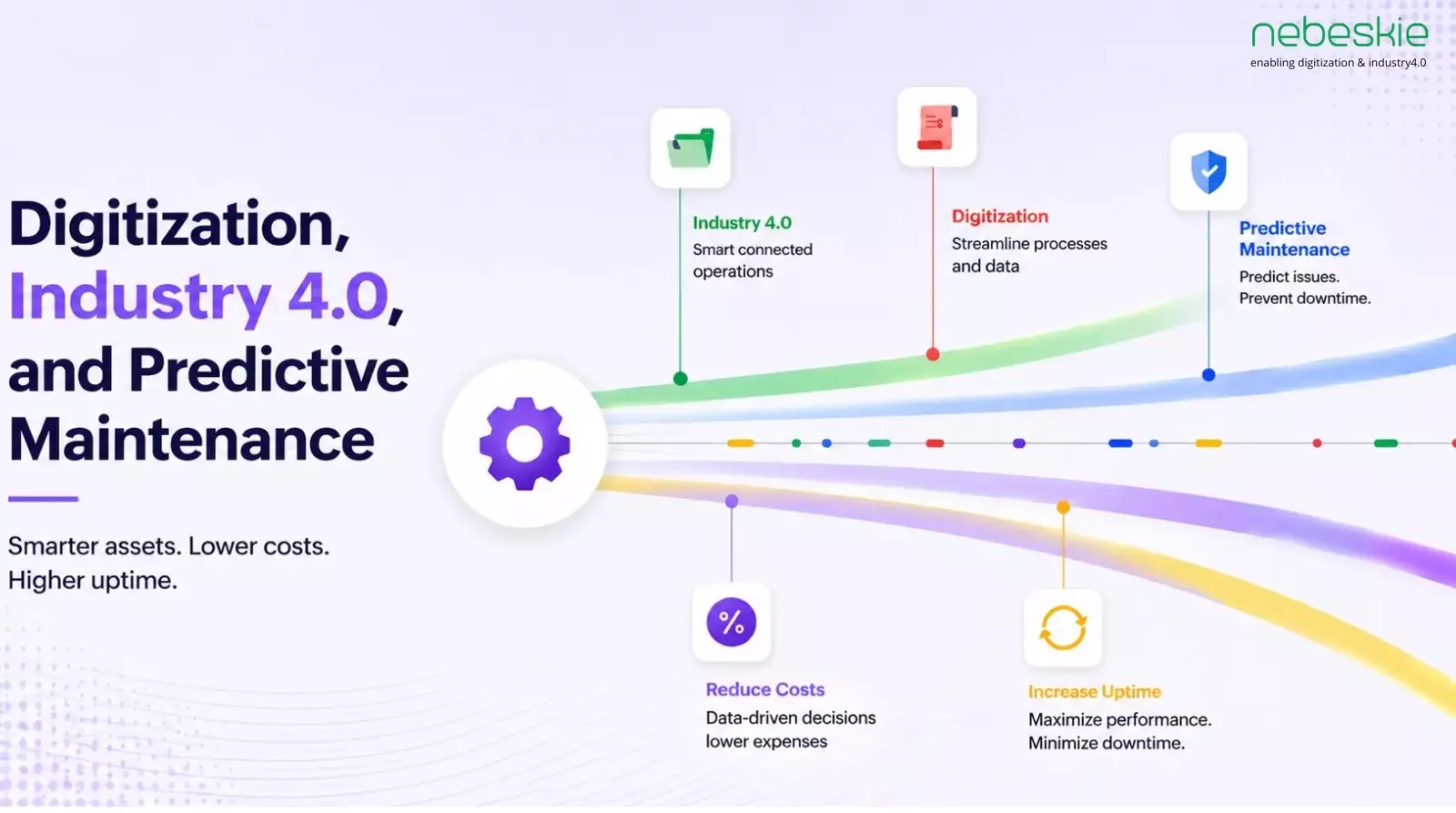
Why Predictive Maintenance Matters
Organizations in manufacturing, energy, transportation, and utilities struggle to minimize downtime without inflating costs. An effective asset management strategy ensures this balance: keeping expenses under control while maximizing uptime. The goal is clear — avoid unnecessary maintenance, reduce unplanned downtime, and stay compliant with evolving regulations.
Preventive vs. Predictive Maintenance
- Preventive maintenance: Scheduled at fixed intervals, regardless of asset condition.
- Predictive maintenance: Triggered only when data indicates a potential risk of malfunction or failure.
Predictive maintenance requires investment in IIoT-driven continuous monitoring systems that connect OT with IT. While upfront costs are higher, long-term operational savings come from eliminating unnecessary maintenance and extending asset life.
How Predictive Maintenance Works
Predictive maintenance leverages real-time asset condition monitoring. By analyzing performance data, organizations can proactively schedule repairs or part replacements before failures occur. This approach transforms maintenance from reactive firefighting into strategic foresight.
Benefits of Predictive Maintenance
PwC’s 2025 report highlights measurable gains in factories adopting predictive maintenance:
- Reduce costs by 12%
- Improve uptime by 9%
- Lower safety, health, and quality risks by 14%
- Extend asset lifetime by 20%
These outcomes directly impact competitiveness in Industry 4.0 environments.
Reducing Maintenance Costs
Unexpected failures contribute disproportionately to an asset’s total cost of ownership. By adopting data-driven maintenance strategies, organizations can predict and prevent breakdowns, saving millions annually.
Key industry insights:
- 82% of companies experienced downtime in the last 3 years — Aberdeen Research, 2021
- 70% of respondents lack visibility into maintenance schedules — Vanson Bourne Research
- 5–20% productivity loss due to poor maintenance strategies — PTC
IIoT-Powered Predictive Maintenance
Modern predictive maintenance relies on IIoT-based continuous monitoring and AI-driven analytics. Historical and real-time data from multiple sources enable accurate predictions about asset health, utilization, and performance. This empowers organizations to:
- Optimize maintenance schedules
- Reduce inventory costs for critical parts
- Improve OEE (Overall Equipment Effectiveness)
- Enhance safety and compliance for operators
Final Thought
In 2026, predictive maintenance is no longer optional — it’s a competitive necessity. Organizations that embrace digitization and Industry 4.0 practices gain resilience, efficiency, and sustainability, while those clinging to outdated preventive models risk falling behind.