
Energy monitoring has become a standard practice across industries. Facilities track consumption, implement efficiency projects, and report savings. Yet, many stop short of the most critical step: benchmarking. Without comparing performance against peers or industry standards, organizations risk missing transformative opportunities
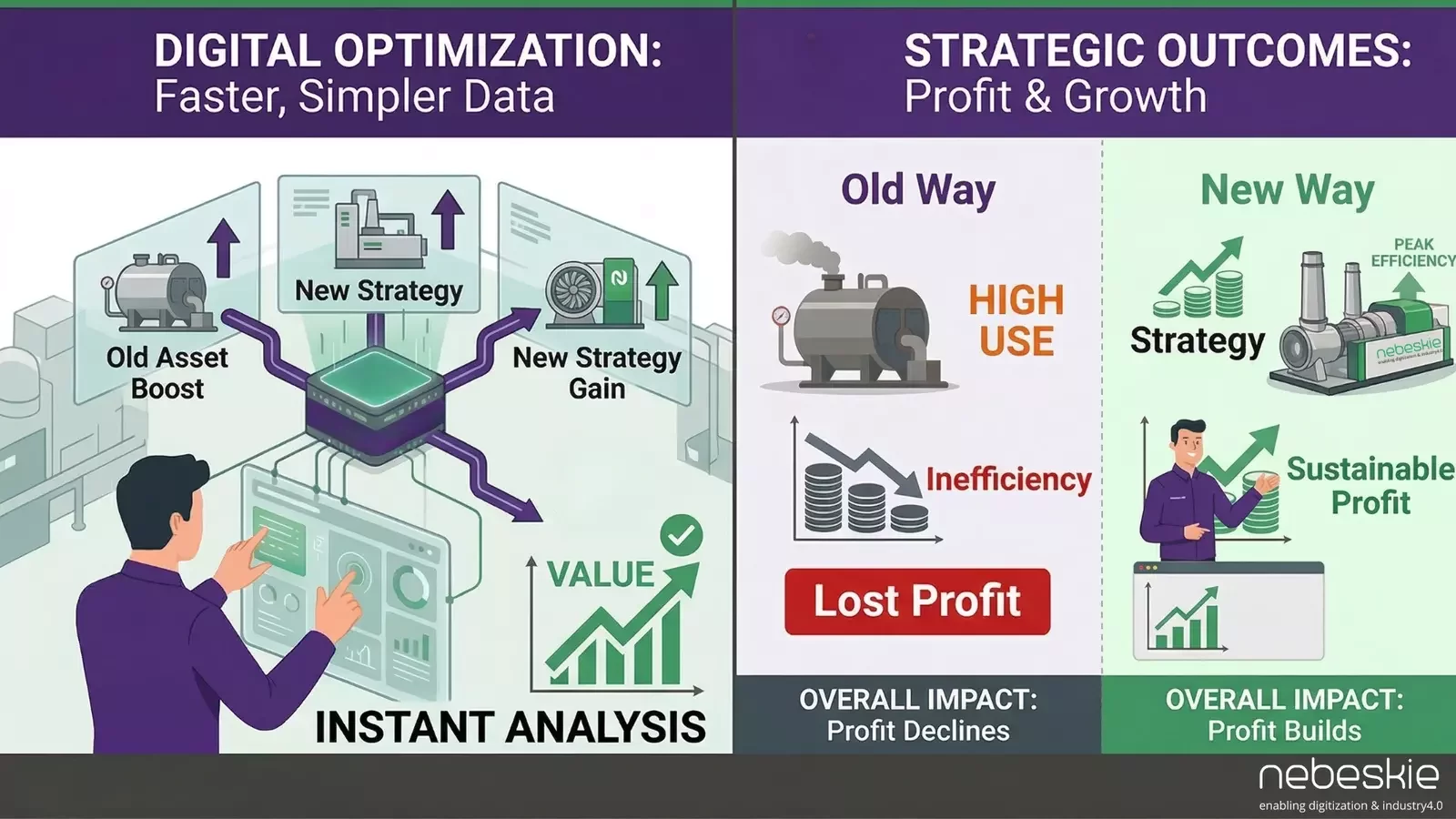
Why Monitoring Alone Isn’t Enough
Monitoring tells you how much energy you use. Benchmarking tells you how well you use it.
- Monitoring: Tracks internal consumption and project outcomes.
- Benchmarking: Compares performance metrics (kW/TR, INR/TR, etc.) against best‑in‑class facilities, revealing gaps and opportunities.
Facilities that rely only on monitoring often celebrate incremental savings but overlook structural inefficiencies that benchmarking would expose.
Case in Point
A research facility once installed a diesel‑fired vapour absorption chiller (VAM) to overcome unreliable grid power. At the time, discounted diesel made the system appear cost‑effective. The team diligently tracked lighting retrofits, pump upgrades, and biomass utilization, reporting consistent savings.
- Diesel VAM: ~2.5 kW/TR, INR 12 per TR
- Modern VCR Chiller: ~0.55 kW/TR, INR 4.4 per TR
The differential savings amounted to ₹65 lakhs annually, with a payback period under 1.5 years. Had benchmarking been applied earlier, the facility could have unlocked ₹300 lakhs in cumulative savings.
The Benchmarking Advantage
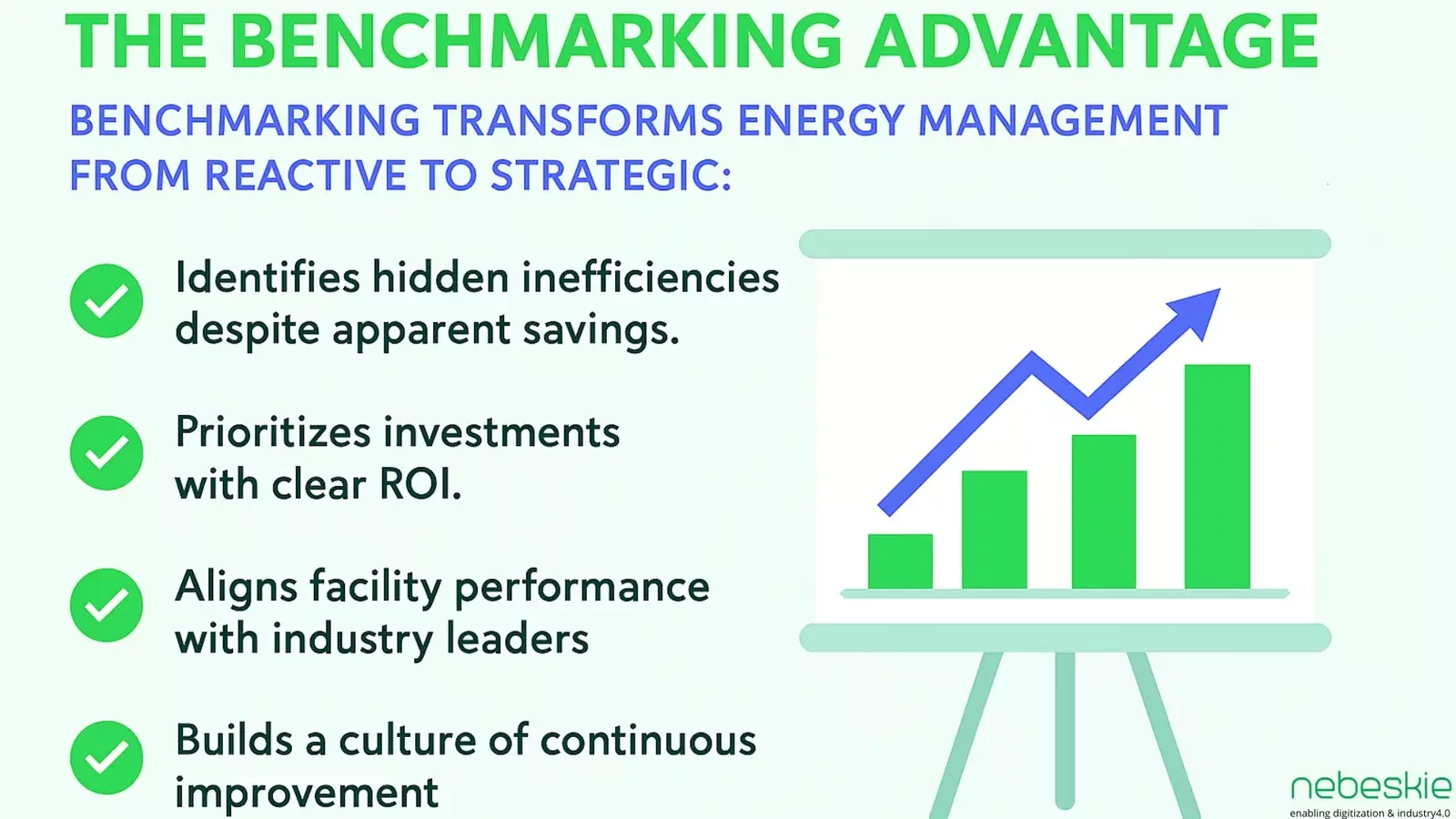
Benchmarking transforms energy management from reactive to strategic:
- Identifies hidden inefficiencies despite apparent savings.
- Prioritizes investments with clear ROI.
- Aligns facility performance with industry leaders.
- Builds a culture of continuous improvement
The Role of OT–IT Integration
With IoT and advanced analytics, benchmarking is no longer a manual exercise. Real‑time integration of operational technology (OT) with IT systems enables:
- Continuous tracking of performance metrics.
- Automated comparison with industry benchmarks.
- Actionable insights for facility managers and CXOs.
This integration ensures decisions are data‑driven, timely, and aligned with long‑term sustainability goals.